
NAD+ Injections vs Nasal Spray vs Patches: What to Know
Compare NAD+ injections, nasal spray, and patches: how each works, what research shows, side effects, cost factors, and how to start with a clinician.
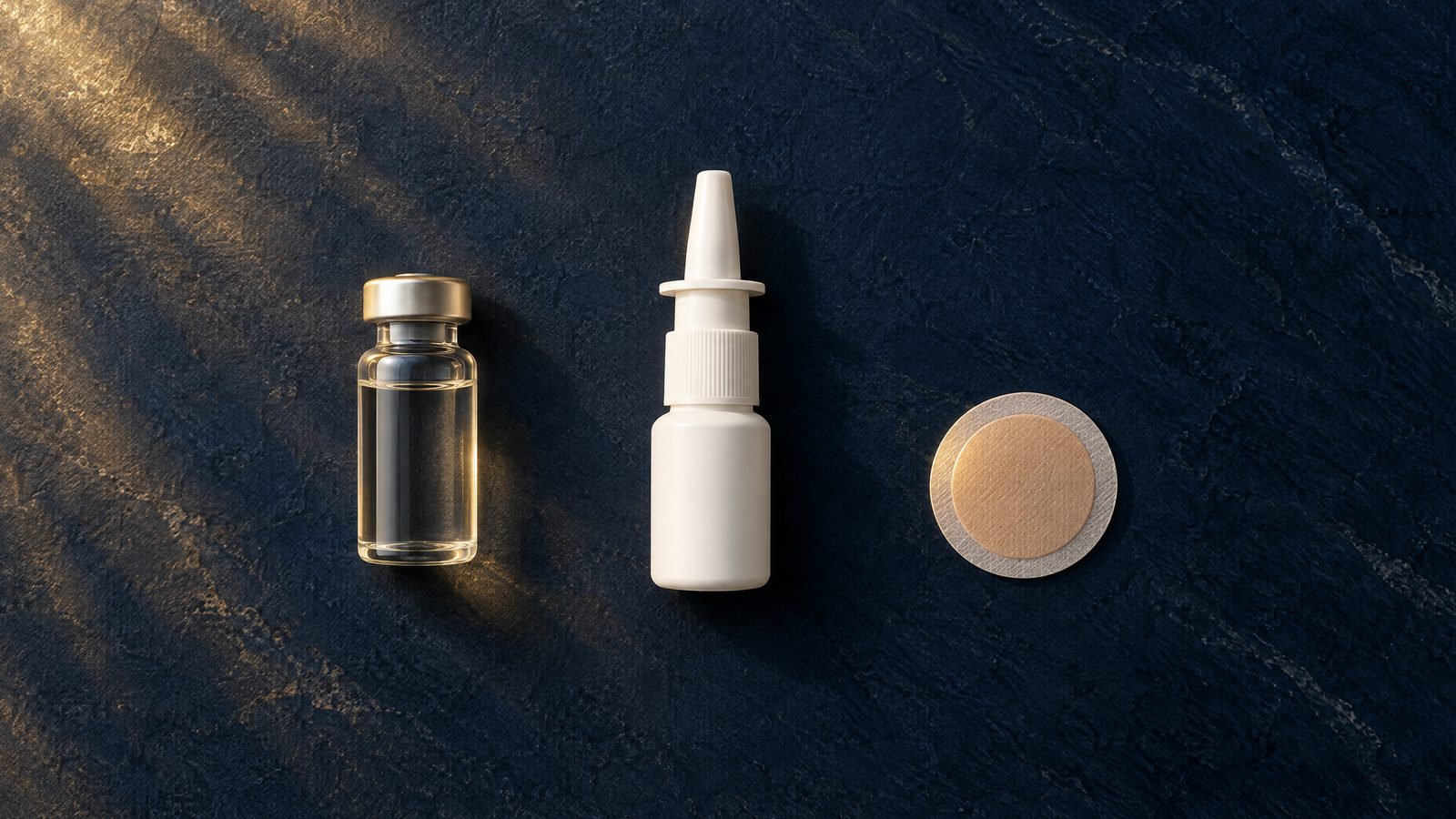
NAD+ injections deliver NAD+ into a muscle or under the skin, NAD+ nasal sprays offer a needle-free route, and NAD+ patches aim to deliver it slowly through the skin. None of these formats is FDA-approved for energy or healthy aging, and human research on all three is still early. The best fit depends on your goals, your comfort with needles, and a licensed clinician's review.
This guide explains what NAD+ is, what the research does and does not show, how the main formats compare, and which side effects and red flags to watch for. If you are already leaning toward a shot, you can read about StemVera's clinician-guided NAD+ injections or browse the wider anti-aging and wellness options as you go.
What is NAD+ and why do people want more of it?
NAD+ (nicotinamide adenine dinucleotide) is a coenzyme found in every cell. Your body makes it from forms of vitamin B3 and uses it to turn food into usable energy and to run hundreds of other chemical reactions. People want more because NAD+ is linked to cellular energy and aging, though proof that boosting it helps is limited.
The NIH Office of Dietary Supplements notes that more than 400 enzymes depend on NAD to work, which is why NAD+ became a major focus of aging research.
The popular story goes like this: NAD+ falls as you age, so topping it up should restore your energy. The real picture is less tidy. A 2025 review in Nature Metabolism found that age-related NAD+ decline has been seen consistently in only a limited number of human studies. A 2026 study across seven groups of people found that whole-blood NAD+ stayed remarkably stable with age and with lifestyle changes. That does not make NAD+ unimportant. It means the case for "refilling" it is still being worked out.
Do NAD+ injections actually work?
Nobody knows yet. Oral NAD+ building blocks such as NR and NMN reliably raise NAD+ in the blood, but they have shown few clear health benefits in human trials. Injected NAD+ has almost no controlled trials for energy or aging. Some people say they feel better, but personal reports are not the same as proof.
Here is what the research does show so far:
- Oral precursors raise blood levels. A 2023 review of 25 human trials of nicotinamide riboside (NR) in Science Advances found that NR repeatedly increased NAD+ in the blood and appeared safe, but produced few clinically meaningful effects.
- NMN looks similar. A 2023 review in Advances in Nutrition found oral NMN was well tolerated in short studies, but said it is too early to say whether it slows age-related decline.
- Injected NAD+ is barely studied. In a small 2019 pilot study of slow intravenous NAD+, blood levels did not rise at all for the first two hours, which suggests the body breaks NAD+ down or pulls it into tissues quickly. Independent reviews have found few or no controlled trials of injected NAD+ for anti-aging or wellness.
- Injectable NR is in early testing. Small, company-sponsored pilot studies of injectable NR have focused mainly on safety and short-term blood levels, not on proving benefits.
Also know that compounded NAD+ and NR products are not FDA-approved and do not go through FDA premarket review for safety, effectiveness, or quality. Using them for energy, focus, or healthy aging is off-label, and results vary.
NAD+ injections vs nasal spray vs patches: how do they compare?
Injections put NAD+ into a muscle or under the skin, skipping the gut. Nasal sprays deliver it through the lining of the nose without needles. Patches aim for slow delivery through the skin. No format has strong human data showing better results than another, so the choice usually comes down to comfort, routine, side effects, and your clinician's judgment.
| Format | How it is given | What the research shows | Common side effects | May suit you if you |
|---|---|---|---|---|
| NAD+ injection | Into a muscle (intramuscular) or under the skin (subcutaneous) | Very few controlled human studies | Injection site soreness, flushing or warmth, nausea, headache | Are comfortable with needles and want a clinician-guided plan |
| NAD+ nasal spray | Sprayed into the nose | Published human data are very limited | Nasal dryness or irritation, mild burning, headache | Want a needle-free daily routine |
| NAD+ patch | Worn on the skin | Little published data on how much NAD+ crosses the skin | Skin irritation where the patch sits | Want the simplest routine (currently unavailable through StemVera) |
| NR injection | Into a muscle, as an NAD+ precursor | Early pilot studies focused on safety | Injection site soreness, tingling, sinus pressure, headache | Want a precursor option with clinician oversight |
| Oral NR or NMN supplement | Capsule or powder, sold over the counter | Raises blood NAD+; few proven clinical benefits | Generally well tolerated in short studies | Want a lower-commitment place to start |
NAD+ injections: subcutaneous vs intramuscular
Subcutaneous shots go into the fatty layer just under the skin. Intramuscular shots go deeper, into a muscle. Some clinics use one route, some use the other, and there is no strong evidence that either works better for NAD+. StemVera's NAD+ injection plans are listed as intramuscular, and your clinician and pharmacy instructions explain exactly how to use them.
NAD+ nasal spray
A NAD+ nasal spray is a needle-free option that many people find easier to fit into a daily routine. The trade-off is that published human research on NAD+ sprays is very thin, and mild nasal irritation is common early on. A spray may not suit you if you get frequent nosebleeds, have chronic sinus problems, or had recent nasal surgery.
NAD+ patches
Patches promise steady, hands-off delivery. But NAD+ is a large, charged molecule, and there is little published data showing how much of it passes through intact skin. Treat bold patch claims with caution.
NAD+ vs NMN vs NR: what is the difference?
NAD+ is the active coenzyme itself. NR (nicotinamide riboside) and NMN (nicotinamide mononucleotide) are precursors, building blocks your cells convert into NAD+. Both are related to vitamin B3. The precursors have more human research behind them than NAD+ itself, mostly as oral supplements, though their clinical benefits are still unproven.
- NAD+: the finished molecule. Available by prescription as compounded injections and nasal sprays.
- NR: a form of vitamin B3 that the body turns into NAD+. It is sold as an over-the-counter supplement and is also available as a compounded nicotinamide riboside (NR) injection through a clinician.
- NMN: one step closer to NAD+ than NR. Its U.S. supplement status went back and forth. In late September 2025, FDA concluded that NMN is not excluded from the definition of a dietary supplement, so it can again be sold as one under the usual new dietary ingredient rules. That decision has since been challenged in federal court.
- Niacin and nicotinamide: the classic vitamin B3 forms. High doses of nicotinic acid are known to cause skin flushing, while nicotinamide does not.
What side effects can NAD+ injections and sprays cause?
Most reported side effects are mild and short-lived: flushing or warmth, nausea, headache, light dizziness, and soreness or redness where you inject. Nasal sprays can cause irritation, dryness, or a mild burning feeling. Severe chills, shaking, vomiting, or signs of an allergic reaction are not normal and need prompt medical care.
Common side effects
- Flushing, warmth, or mild nausea
- Headache or light dizziness
- Soreness, redness, swelling, or bruising at the injection site
- With nasal sprays: dryness, irritation, or mild burning in the nose
- With NR injections: tingling in the face or hands, or a feeling of sinus or head pressure
Red flags: get medical help
- Severe chills, shaking, vomiting, or extreme fatigue after a dose
- Hives, facial swelling, or trouble breathing
- Worsening redness, heat, pain, or pus at an injection site, or a fever
- Chest tightness, fainting, an irregular heartbeat, or severe weakness
- Severe nasal pain, frequent nosebleeds, or major swelling while using a spray
Sourcing matters here. In October 2024, FDA warned that some compounders were using food-grade NAD+ to make injectable products. The agency said reports of severe chills, shaking, vomiting, and fatigue after NAD+ injections were consistent with contamination by endotoxins, toxic substances from bacteria. In 2025, a batch of compounded NAD+ for injection was recalled at FDA's most serious recall level after elevated endotoxin levels were found. Only use NAD+ dispensed for you by a licensed pharmacy, and never buy vials labeled "research use only."
Who should not use NAD+ injections or nasal sprays?
NAD+ products are not for everyone. Clinicians typically advise against them during pregnancy, while trying to conceive, while breastfeeding, and for anyone under 18. Severe allergies, an active infection, liver or kidney disease, a cancer history, or a bleeding risk all call for careful review first. Unexplained fatigue also deserves a real diagnosis, not just a wellness shot.
Your clinician may advise against NAD+ or NR, or suggest an alternative, if you:
- Are pregnant, trying to become pregnant, or breastfeeding
- Are under 18
- Have a history of severe allergies or injection reactions
- Have an active infection, a fever, or a significant illness right now
- Have a bleeding disorder or take blood thinners
- Have significant liver or kidney disease, or a current or past cancer diagnosis (NR in particular requires clinician review)
- Have frequent nosebleeds, chronic sinus problems, or recent nasal surgery (for sprays)
When fatigue needs an in-person checkup
Tiredness and brain fog are top reasons people look into NAD+. They are also symptoms of treatable problems such as anemia, thyroid disease, sleep apnea, depression, and vitamin B12 deficiency. See a doctor in person if your fatigue is new or getting worse, or if it comes with weight loss, fever, night sweats, shortness of breath, or chest pain. Our guide to vitamin B12 injections and who actually needs them covers one common, testable cause.
What affects the cost of NAD+ injections?
NAD+ costs vary because programs differ in format, strength, how often the clinician prescribes it, and what is bundled in. Clinic IV drips include chair time and staff, while at-home options shift that work to you. Look for clear four-week pricing that already includes the clinician review, pharmacy fulfillment, and any supplies you need.
- Format: NAD+ injection, nasal spray, or NR injection
- Strength and frequency: set by your clinician, and a major driver of how much medication you need
- What is included: clinician review, follow-up messaging, and injection supplies
- Pharmacy quality: sterile compounding costs more than gray-market vials, for good reason
Because prices change, see current pricing on the NAD+ injection page, the NAD+ nasal spray page, and the NR injection page. StemVera shows four-week pricing up front, with no subscription required.
How do you choose the right NAD+ format?
Start with your goal and your comfort with needles. If you want the most-studied route, oral precursors lead. If you want a needle-free prescription option, a nasal spray is simplest. If you are fine with injections and want clinician oversight, an NAD+ or NR injection may fit. Your clinician weighs your health history before recommending any of them.
- Name your goal. Energy, focus, recovery, or general healthy aging. Be specific, and pick a date to check whether it is helping.
- Rule out medical causes. If fatigue is your main complaint, basic labs and better sleep may matter more.
- Pick a format you will actually use. A routine you keep skipping helps no one.
- Share your full medication list. Include supplements and anything else you inject.
Where glutathione and other wellness options fit
People exploring NAD+ often ask about glutathione injections too. Glutathione is a different molecule, a naturally occurring antioxidant your cells use to manage oxidative stress, and it is not a substitute for NAD+. For other options, see our peptide therapy guide and our overview of low dose naltrexone uses and side effects.
How to get started with NAD+ through StemVera
StemVera is a telehealth service, so the process happens online. You choose a format, complete a short health questionnaire, and a licensed U.S. clinician reviews it. Some treatments require a video visit. If the clinician approves treatment, a licensed pharmacy prepares and ships your medication discreetly, and your care team stays available for follow-up questions.
- Pick a format. Compare NAD+ injections, NAD+ nasal spray, and NR injections.
- Complete your intake. Share your goals, history, allergies, and every medication and supplement you take.
- Clinician review. A licensed clinician decides whether NAD+ is appropriate for you.
- Pharmacy delivery. If prescribed, your medication, supplies, and instructions ship to you.
- Follow-up. Message your care team with side effects or questions.
You can see each step on the how it works page, or explore the rest of the anti-aging and wellness category.
Bottom line
NAD+ is essential to how your cells make energy, but the idea that topping it up restores youth is still a hypothesis, not a proven fact. Injections, nasal sprays, and patches are different routes toward the same uncertain goal. If you try one, use a licensed pharmacy, involve a clinician, and keep expectations realistic.
Frequently asked questions
Related treatments
Explore the clinician-supervised programs StemVera offers for the conditions and medications discussed in this article.