GLP-1 Pill vs Injection: Oral Semaglutide and Options in 2026
GLP-1 pill vs injection in 2026: compare the Wegovy pill, Foundayo, and weekly shots on routine, results, and side effects to find a needle-free fit.

A GLP-1 pill is a once-daily tablet that works on the same appetite and blood sugar pathway as weekly GLP-1 injections. As of June 2026, two pills are FDA-approved for weight management in the U.S.: the Wegovy pill (oral semaglutide) and Foundayo (orforglipron). Weekly injections remain the most studied option, while pills trade the needle for a daily routine.
This guide compares GLP-1 pills and injections side by side: how each is taken, what the trials showed, side effects, and who tends to do better with which format. It also explains how compounded needle-free options, like sublingual semaglutide, differ from branded pills. For the full menu of clinician-guided programs, see StemVera weight loss treatments.
What is a GLP-1 pill, and which ones are FDA-approved in 2026?
A GLP-1 pill is an oral medication that activates GLP-1 receptors to reduce hunger and increase fullness. In mid-2026, the Wegovy pill and Foundayo are FDA-approved for chronic weight management. Rybelsus, an older semaglutide tablet, is approved for type 2 diabetes, not for weight loss. All three require a prescription.
Here is where each one stands as of June 2026:
- Rybelsus (oral semaglutide): FDA-approved in 2019 as the first GLP-1 tablet, for blood sugar control in adults with type 2 diabetes. It is not labeled for weight management.
- Wegovy pill (oral semaglutide 25 mg): FDA-approved in December 2025 and launched in early January 2026. It is labeled to reduce excess body weight and keep it off long term, and its label also includes reducing the risk of major cardiovascular events such as heart attack and stroke.
- Foundayo (orforglipron): FDA-approved on April 1, 2026, for adults with obesity, or overweight plus a weight-related health condition. It is a small-molecule GLP-1 drug rather than a peptide like semaglutide, and its label carries no food or water restrictions.
Is Rybelsus the same as the Wegovy pill?
They share an active ingredient, but they are different products with different strengths and different approved uses. If you are comparing brand names, our guide to Ozempic vs Wegovy explains how the same molecule can carry different labels, doses, and insurance rules.
How does a GLP-1 pill compare with a weekly injection?
The biggest differences are routine and rules, not the basic mechanism. Injections are given once a week under the skin. Pills are taken every day, and semaglutide pills must be taken on an empty stomach. Trial results for the newer pills look encouraging, but weekly injections have the longest track record.
| Feature | Wegovy pill | Foundayo | Weekly injections (semaglutide or tirzepatide) |
|---|---|---|---|
| How often | Once daily | Once daily | Once weekly |
| How it is taken | Swallowed tablet, morning, empty stomach | Swallowed tablet, any time of day | Under-the-skin injection with a pen or syringe |
| Food and water rules | Strict: plain water only, then a waiting period | No food or water restrictions on the label | None tied to meals |
| Needles | No | No | Yes |
| FDA status for weight management | Approved (Dec 2025) | Approved (Apr 2026) | Branded versions approved; compounded versions are not |
| Labeled uses | Weight management and cardiovascular risk reduction | Weight management | Varies by brand and product |
On results, the Wegovy pill's main trial (published in the New England Journal of Medicine in 2025) found weight loss at 64 weeks that the researchers described as similar to earlier trials of weekly semaglutide injections, though the studies were not head to head. In Foundayo's 72-week trial, people on the highest dose who stayed on treatment lost about 12% of their body weight on average, compared with about 1% on placebo. Results vary from person to person, and no medication can guarantee a specific outcome.
If you are deciding between the two main injectable options, our comparison of tirzepatide vs semaglutide walks through how they differ.
Why do semaglutide pills have strict morning rules?
Semaglutide is a peptide, and the stomach breaks down most of it before it can be absorbed. Branded tablets include an absorption enhancer, but only a small fraction of each dose still reaches the bloodstream. Food, coffee, and extra liquid can lower absorption further, so the label sets firm timing rules.
FDA labeling for Rybelsus notes that semaglutide is absorbed mainly in the stomach, that it is co-formulated with an ingredient called salcaprozate sodium to help absorption, and that absorption was higher with a longer fasting period after the dose. The Wegovy pill's patient instructions say to take it each morning on an empty stomach with a small amount of plain water, then wait at least 30 minutes before eating, drinking anything else, or taking other oral medicines.
That routine is easy for some people and a real hurdle for others. If you take several morning medications, drink coffee first thing, or have unpredictable mornings, a daily fasting window can be harder to keep than a once-weekly shot. Foundayo was designed differently, and its label carries no food or water restrictions. Your prescription label and pharmacist are the final word on how to take any medication.
Do GLP-1 pills have fewer side effects than injections?
Not really. Pills and injections in this class share the same main side effects because they act on the same receptor. Stomach-related effects like nausea, diarrhea, constipation, and vomiting are the most common with both. They often ease over time, but they can be strong enough to make some people stop.
In the Wegovy pill's main trial, gastrointestinal side effects were reported by about three in four people taking the pill, compared with about four in ten on placebo. Foundayo's most common side effects were also gastrointestinal, and FDA prescribing information for both pills carries a boxed warning about thyroid C-cell tumors, the same warning found on injectable GLP-1 medications.
The format does change a few practical things:
- Injection-site reactions (redness, itching, small bumps) only apply to shots.
- Storage and supplies differ. The Wegovy pill stays in its original closed bottle until you take it, while injectable pens and vials come with their own storage and sharps-disposal instructions.
- Missed doses matter differently. Ask your clinician what to do if you miss one, and never double up on your own.
For practical tips on the first month, see what to expect in your first 30 days on a GLP-1.
Is sublingual semaglutide the same as the Wegovy pill?
No. Sublingual semaglutide is a compounded, under-the-tongue preparation made by a licensed pharmacy for an individual patient. It is not FDA-approved, it is not the same formulation as the branded tablet, and the sublingual route is off-label. Published human data on how well it is absorbed is limited.
Compounded medications can play a role when a clinician decides they fit a patient's needs, but they are a different category from FDA-approved drugs. FDA does not review compounded products for safety, effectiveness, or quality before they are dispensed, and in 2025 and early 2026 the agency sent warning letters to companies whose marketing implied compounded GLP-1s were the same as approved brands. A trustworthy provider will tell you plainly which kind of product you are getting.
Our guides to what compounded GLP-1 means and semaglutide injection vs sublingual go deeper on the trade-offs, including questions to ask about the pharmacy that fills your prescription.
What needle-free weight loss options does StemVera offer?
StemVera currently offers two clinician-guided needle-free programs: compounded sublingual semaglutide and compounded oral weight loss capsules. Both require a health questionnaire and a licensed clinician's review. Neither is the same as the Wegovy pill or Foundayo, and both are prescribed only when a clinician decides they are appropriate.
| StemVera option | Format | What it is | Key screening points |
|---|---|---|---|
| Sublingual semaglutide | Under the tongue | Compounded semaglutide in a non-injection format; off-label route | MTC or MEN2 history, pancreatitis, gallbladder disease, pregnancy, diabetes medications |
| Oral weight loss capsules | Swallowed capsule | Compounded multi-ingredient capsule that may combine naltrexone with bupropion, metformin, topiramate, and methylcobalamin (a form of B12); not a GLP-1 | Opioid use, seizure history, eating disorders, mood conditions, pregnancy, blood pressure |
| Semaglutide injection | Weekly shot | GLP-1 injection; may be filled as an FDA-approved or compounded product | Same GLP-1 screening as above |
| Tirzepatide injection | Weekly shot | Dual GIP and GLP-1 injection; compounded if prescribed that way | Same GLP-1 screening, plus insulin or sulfonylurea use |
The oral capsules are worth a closer look if you want to avoid needles but are not a good fit for GLP-1 medications. They are not the same as brand-name combination pills, and because they include naltrexone, they are not an option for anyone using opioid pain medicines. For current prices, see the pricing on each treatment page.
Who is a better fit for a pill, and who should stick with an injection?
A pill may suit you if needles are the main thing holding you back and you can keep a steady daily routine. An injection may suit you better if you prefer once-a-week dosing, take many morning medications, or want the option with the most long-term data. Your clinician weighs these factors with your health history.
A pill may make sense if you
- Strongly dislike or fear needles
- Already take a morning medicine on a set schedule
- Travel often and find injection supplies hard to manage
- Are comfortable taking something every single day
An injection may make sense if you
- Tend to forget daily medications
- Need coffee or breakfast right away in the morning
- Take several oral medicines that need their own timing
- Want the format with the longest research history
Who GLP-1 medications are not for
GLP-1 medications in any form are generally not appropriate if you are pregnant, trying to become pregnant, or breastfeeding, or if you or a close family member has had medullary thyroid carcinoma or MEN2. A history of pancreatitis, significant gallbladder disease, severe stomach or bowel disease, type 1 diabetes, or certain kidney problems calls for extra caution or a different plan. Before starting, review our questions to ask before GLP-1 weight loss.
When should you see a doctor in person?
Telehealth works well for screening and follow-up, but some symptoms need hands-on care right away. Seek urgent in-person care for severe or persistent belly pain, repeated vomiting, signs of dehydration, a lump or swelling in your neck, or signs of an allergic reaction. Call 911 for trouble breathing.
- Severe abdominal pain that may spread to your back (possible pancreatitis)
- Pain in the upper right belly, fever, or yellowing skin or eyes (possible gallbladder problems)
- Vomiting or diarrhea that keeps you from holding down fluids, dizziness, or very little urine
- A lump in the neck, trouble swallowing, or a hoarse voice that does not go away
- Hives, swelling of the face or throat, or trouble breathing
- New or worsening depression or thoughts of self-harm
If you have diabetes and take insulin or a sulfonylurea, also watch for signs of low blood sugar, such as shakiness, sweating, or confusion, and contact your care team promptly.
How to get started with a GLP-1 or needle-free option through StemVera
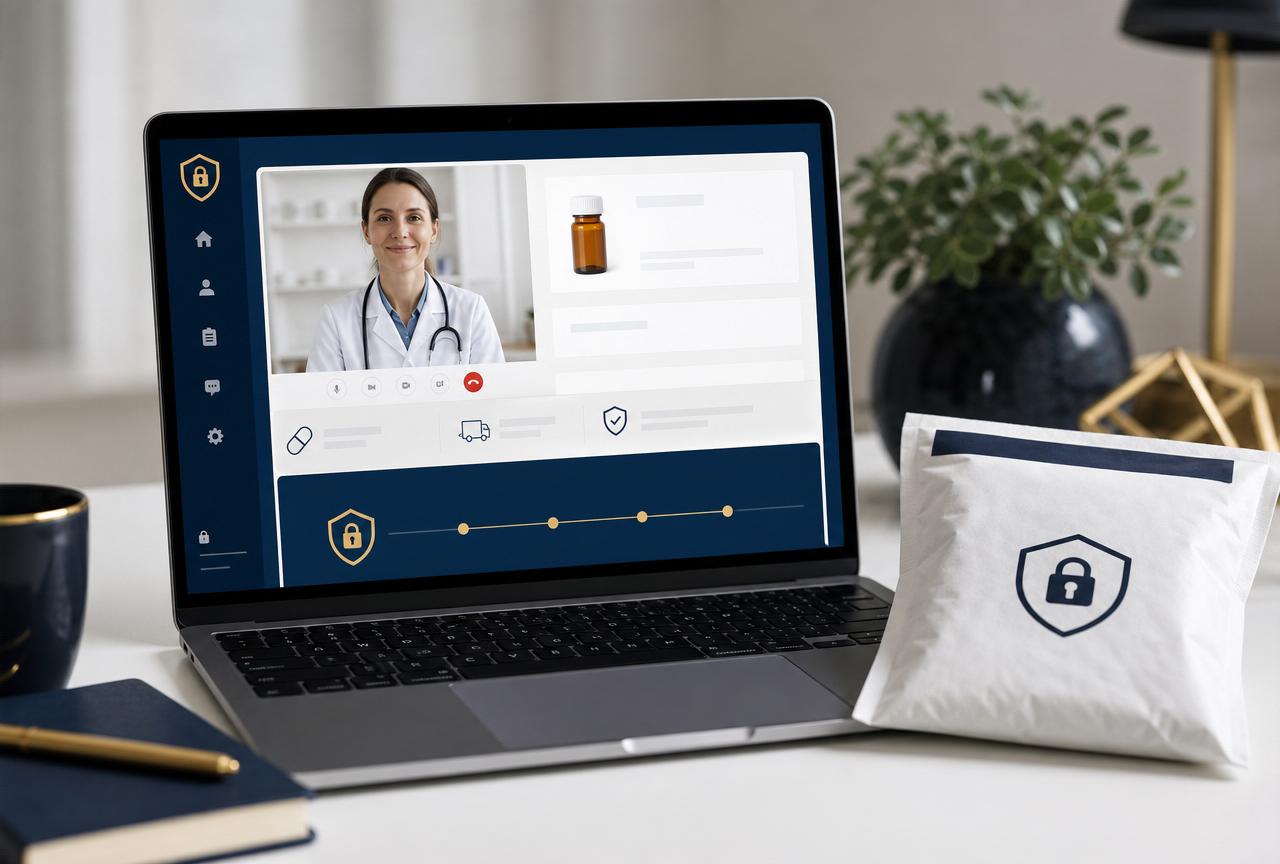
Getting started with StemVera happens online. You choose a treatment, complete a short health questionnaire, and a licensed U.S. clinician reviews it. Some treatments require a video visit. If you are approved, a licensed pharmacy fills the prescription and ships it to you, and your care team follows up.
- Pick a treatment, such as sublingual semaglutide, oral weight loss capsules, semaglutide injections, or tirzepatide injections.
- Answer the health questionnaire honestly, including every medication and supplement you take.
- A licensed clinician reviews your history and decides whether the treatment is safe and appropriate. They may ask for labs or a video visit.
- If approved, a licensed pharmacy fills your prescription and ships it discreetly.
- Follow-up check-ins help track side effects and progress. Message your care team any time something changes.
You can read the full process on our how it works page, and our guide on how to get a GLP-1 online safely lists red flags to watch for with any online provider. Prices can change, so check current pricing on each treatment page before you start.
Bottom line
GLP-1 pills are now a real, FDA-approved choice for weight management in the U.S., and they are a good fit for people who want to avoid needles. Weekly injections still have the deepest research history. The best format is the one you can take safely and consistently, with a clinician watching for side effects.
Compounded needle-free options like sublingual semaglutide are a separate category from branded pills, so ask clear questions about what you are getting. Whatever you choose, pair the medication with steady protein intake, strength training, and sleep to protect your progress.
Frequently asked questions
Related treatments
Explore the clinician-supervised programs StemVera offers for the conditions and medications discussed in this article.